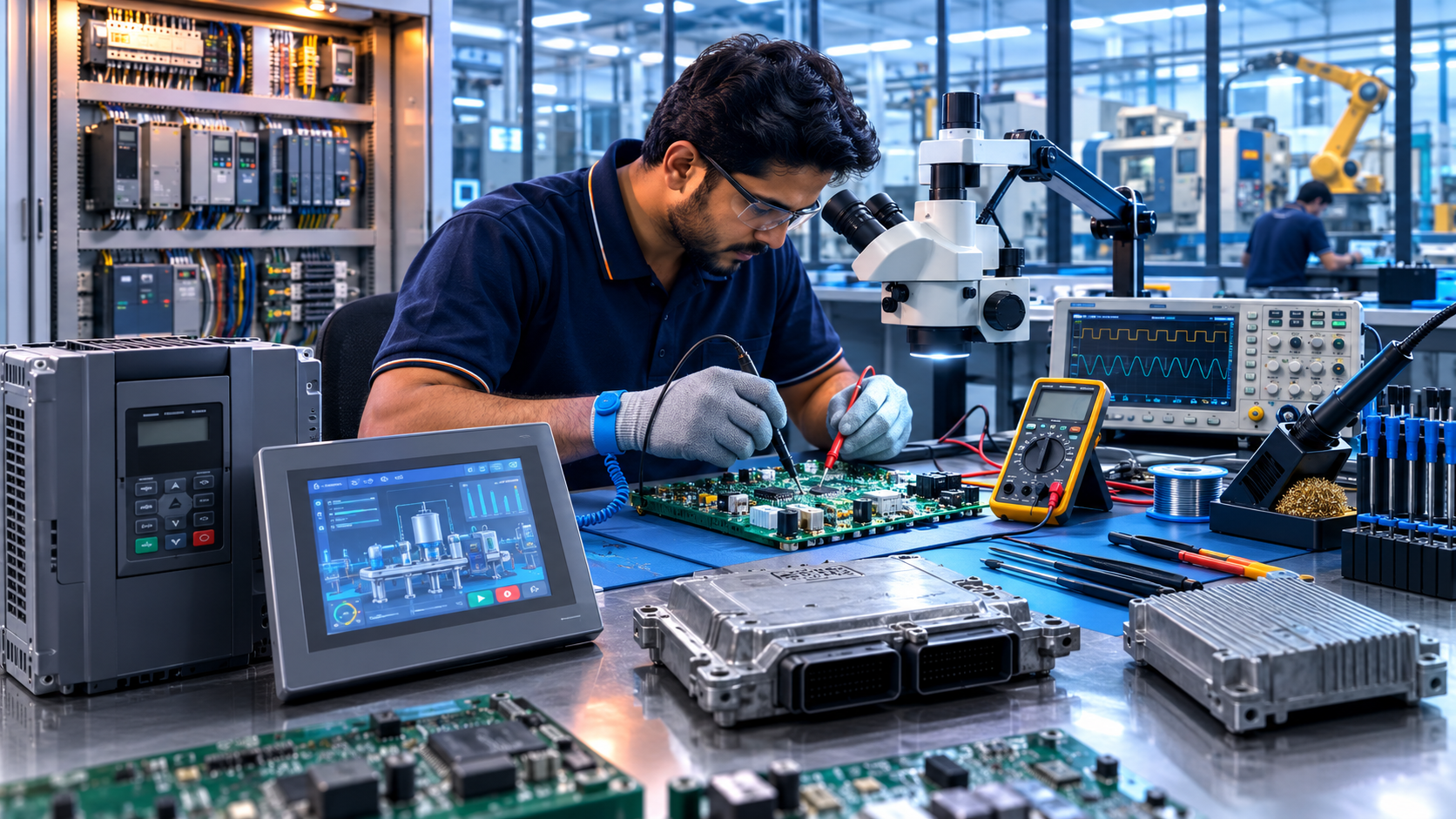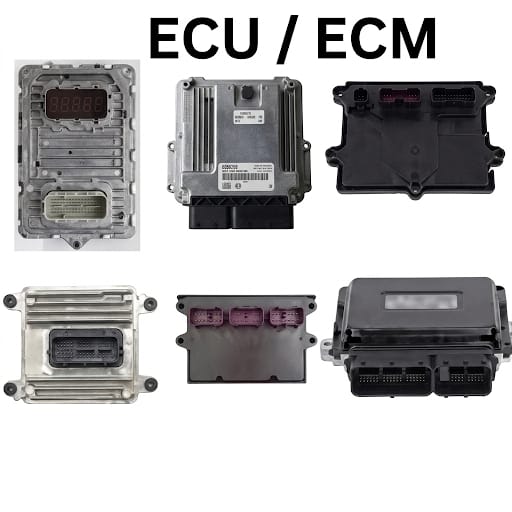

Komatsu excavators—from compact models to heavy PC-series machines—are essential powerhouses in earthmoving, mining, and urban infrastructure construction. Operating smoothly in harsh job-site conditions relies on an intricate balance between hydraulic power and advanced electronic control units. At the center of this control system are dedicated engine control units (ECUs), operator display monitor panels, and complex controller circuit cards.
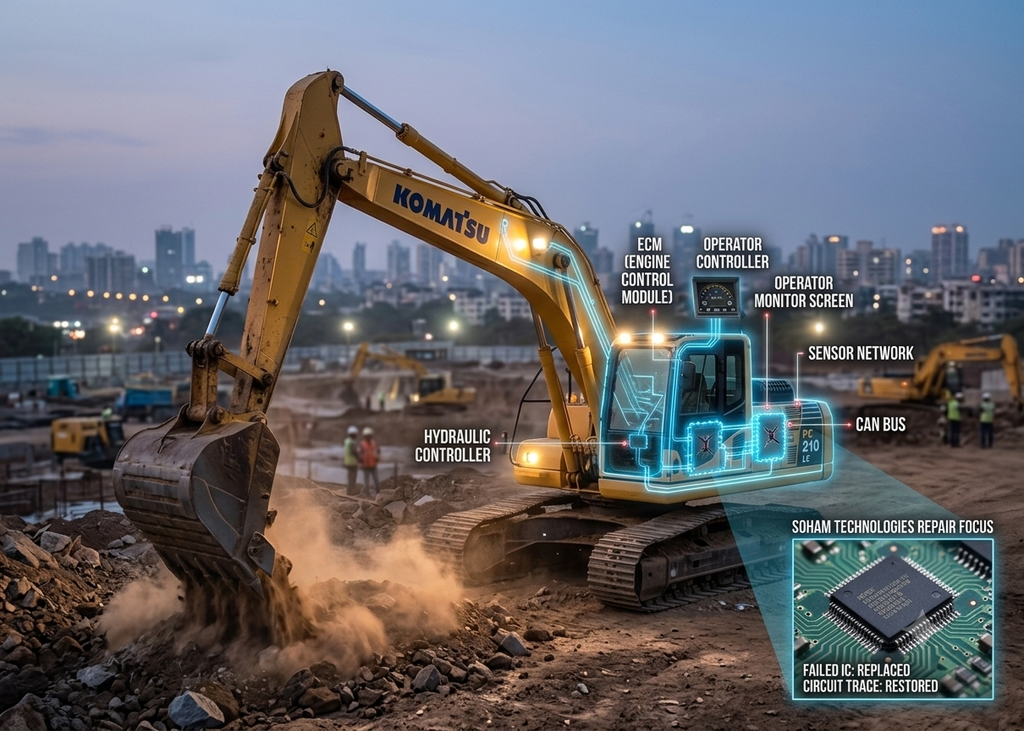
When an electronic module fails on a Komatsu machine, the excavator can suddenly lose hydraulic power, drop into limp mode, or fail to start altogether. Unplanned downtime costs site managers thousands of rupees per hour in idle labor and delayed work schedules. While equipment dealers often suggest replacing complete electronic units, buying new OEM modules involves high expenses and long import waiting periods.
At Soham Technologies, based in Wadala, Mumbai, we deliver specialized component-level repair services for Komatsu heavy machinery electronics. By restoring faulty micro-components directly on the circuit board, we bring your equipment back to full productivity at a fraction of the cost of OEM replacement.
Understanding Komatsu Electronic Systems
Modern Komatsu equipment uses integrated microcontrollers to harmonize machine operation, manage hydraulic distribution, and protect the engine.
1. Komatsu Excavator ECU & Engine Controllers
The Engine Control Unit (ECU) manages fuel delivery, injection timing, turbocharging pressure, and emissions systems. It constantly communicates with the main hydraulic controller to balance engine output with pump torque requirements. When a Komatsu ECU encounters internal circuit damage, the machine can experience engine misfires, erratic throttle response, loss of power, or total shutdown.
2. Komatsu Excavator Monitor Screen & Display Panels
The cabin monitor panel acts as the operator’s primary communication dashboard. Modern Komatsu monitors show critical operating metrics like hydraulic pressure levels, coolant temperature, fault diagnostic codes (DTCs), fuel economy, and operational mode selections (such as Power mode vs. Economy mode). Common monitor issues include cracked digitizers, flickering backlights, black screens, or non-responsive buttons.
3. Main Controller Cards & Pump Drive Circuit Boards
Komatsu controller cards act as the decision-making hubs for hydraulic functionality. They regulate main pump displacement solenoids, swing motor brake signals, arm/boom speed compensation, and travel gear shifts. When controller card circuits deteriorate, hydraulic movements become jerky, delayed, or completely disabled.
Common Causes of Komatsu Circuit Board Failures
- Voltage Surges & Welding Spikes: Arc-welding on the machine frame without disconnecting ECU harness plugs can burn sensitive microprocessors, diodes, and logic ICs instantly.
- Moisture & Fine Dust Ingress: Deteriorated rubber gaskets allow high-pressure wash water or rain inside controller housings, leading to trace corrosion and short circuits across component pins.
- Thermal Stress & Fractured Solders: High operational temperatures inside the engine bay cause thermal expansion, which fractures micro-solder joints (cold solder joints) over time.
- Vibration & Structural Shock: Rough terrain and rock-breaking operations vibrate heavy board-mounted capacitors and power transistors loose from their pads.
Our Repair Capabilities at Soham Technologies
Komatsu Excavator ECU Repair Service
- Fixing damaged power supply ICs and voltage regulators.
- Repairing shorted fuel injector driver MOSFETs and switching channels.
- Restoring corrupted CAN bus communication interface chips.
- Replacing damaged connector headers and repairing burnt copper traces.
Komatsu Excavator Monitor Screen Repair
- Replacing cracked or unresponsive touchscreen digitizers.
- Restoring failed LCD backlights, inverter circuits, and power supply diodes.
- Repairing damaged display processors and graphic memory ICs.
- Fixing non-functional keypads, push-buttons, and rotary switches.
Komatsu Controller Card Repairing in Mumbai
- Fixing solenoid driver circuits causing erratic or dead hydraulic controls.
- Resolving 5V/12V sensor reference voltage drops on controller cards.
- Re-soldering fractured surface-mount components caused by heavy vibration.
- Replacing faulty relays, optocouplers, and signal isolation ICs.
Component-Level Repair vs. Full OEM Replacement
| Feature | Component-Level Repair (Soham Technologies) | Full OEM Module Replacement |
| Direct Cost | 60% to 70% Lower than purchasing new units | Extremely high dealer replacement costs |
| Lead Time | 24 to 72 Hours turnaround | Weeks or months waiting for imported stock |
| Calibration & Data | Preserves engine hours, history, and parameter settings | Requires dealer flashing and re-programming |
| Eco Impact | Reduces industrial e-waste by saving hardware | Discards entire boards due to single bad ICs |
Preventive Maintenance Tips for Site Managers
- Disconnect Controllers Before Welding: Always unplug ECU and controller card harnesses before carrying out arc-welding repairs on the chassis.
- Maintain Stable Electrical Systems: Ensure alternators supply stable voltage and replace aging batteries to avoid voltage ripple damage.
- Protect Cabin Displays: Avoid directing high-pressure water streams directly at monitor screen housings during machine washing.
- Inspect Wiring Harnesses: Ensure harness seals remain tight, preventing oil or moisture from entering pin connectors.