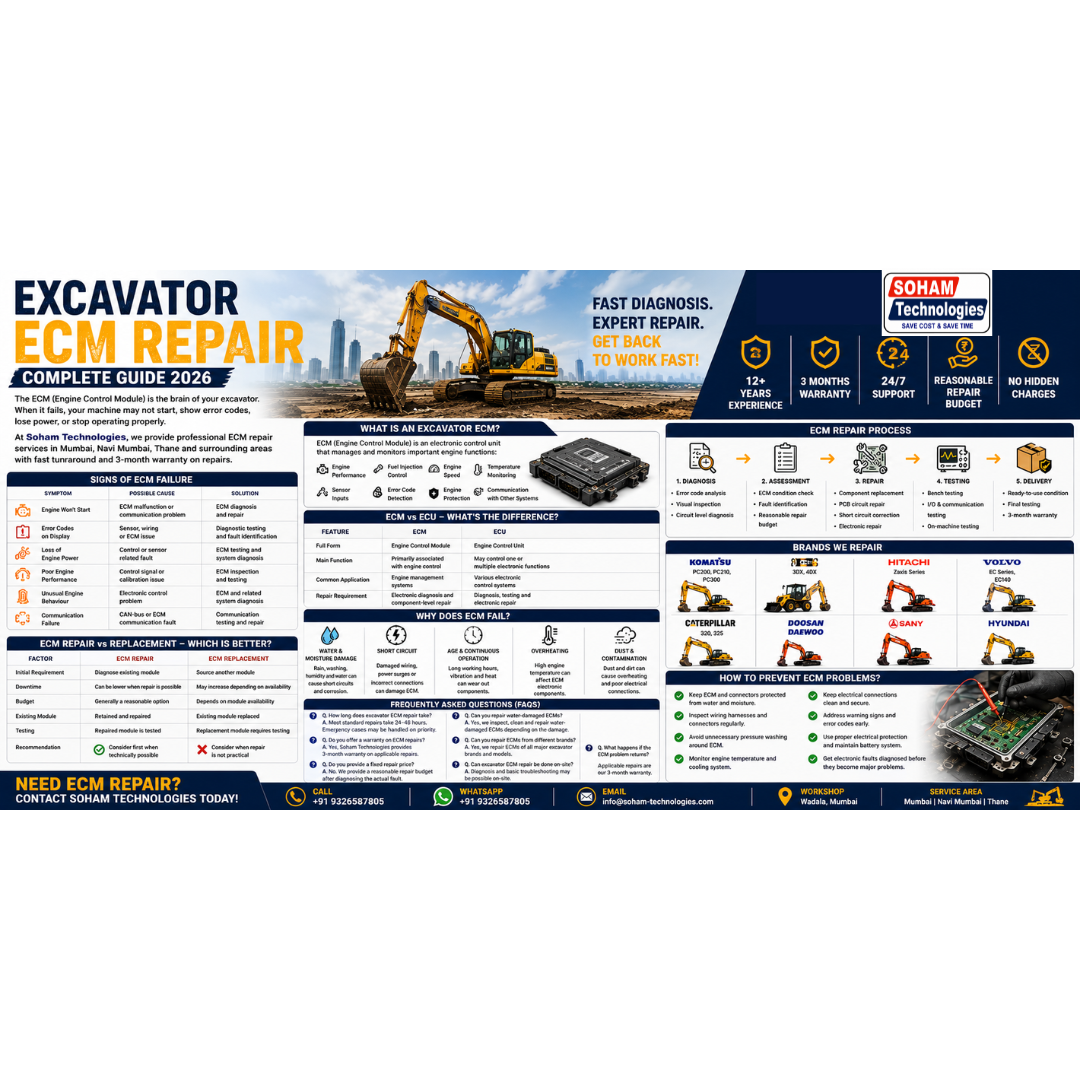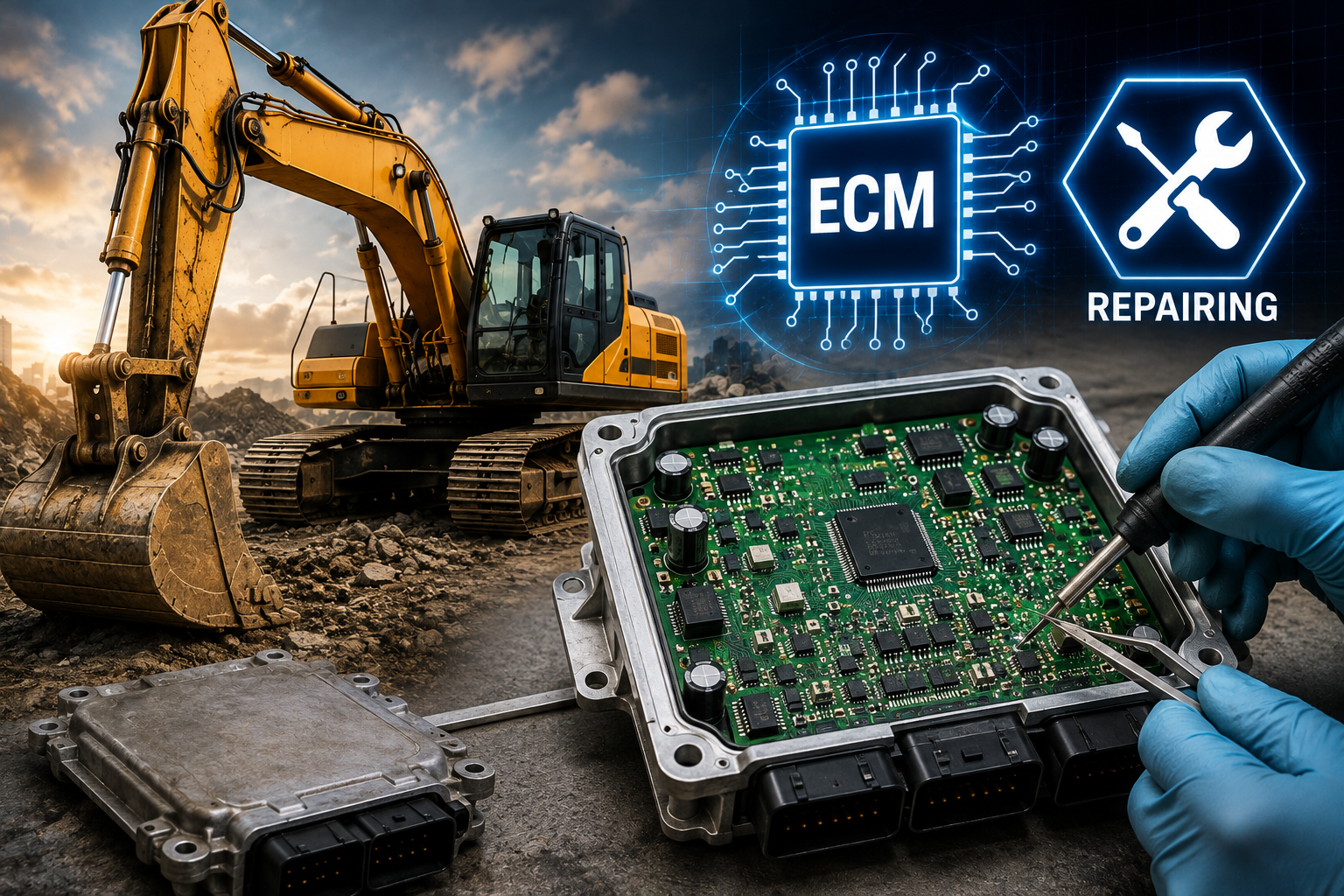

Complete Guide to ECU & ECM Repair Services for Construction Equipment, Cranes & Industrial Engines
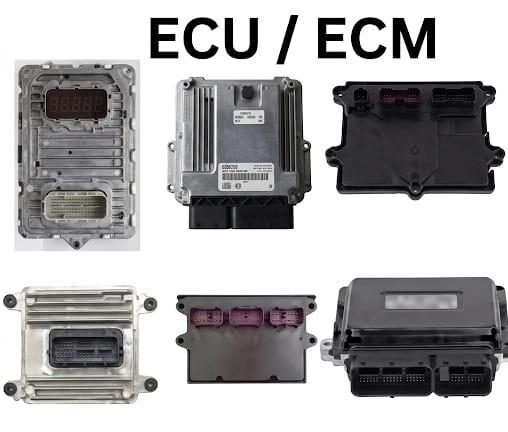
Modern construction and industrial equipment have evolved far beyond purely mechanical systems. Today’s excavators, cranes, wheel loaders, mining machines, generators, and earthmoving equipment rely heavily on sophisticated electronic control systems to deliver superior performance, fuel efficiency, reliability, and operator safety. At the heart of these intelligent systems is the Engine Control Unit (ECU) or Engine Control Module (ECM)—the electronic “brain” responsible for monitoring, controlling, and optimizing engine performance.
When an ECU or ECM fails, even the most powerful machine can become completely inoperative. Common issues such as engine no-start conditions, communication failures, sensor errors, injector faults, power supply damage, or corrupted firmware can result in unexpected downtime and costly production losses. In such situations, professional ECU Repair Services and ECM Repair Services provide a far more economical and practical alternative to replacing the complete module.
At Soham Technologies, we specialize in Engine Control Module Repair and Engine Control Unit Repair through advanced diagnostics, component-level PCB repair, firmware restoration, CAN-Bus troubleshooting, and complete functional testing. Our experienced engineers repair electronic control modules used in excavators, cranes, earthmovers, mining equipment, generators, construction machinery, and other heavy industrial equipment, helping customers minimize downtime and significantly reduce replacement costs.
Whether your machine is experiencing intermittent engine shutdowns, communication faults, injector driver failures, damaged power circuits, or software corruption, our Heavy Equipment ECU Repair and Construction Equipment ECM Repair solutions are designed to restore reliable operation and extend the service life of your valuable equipment.
What is an ECU and ECM?
The Engine Control Unit (ECU), also known as the Engine Control Module (ECM), is a sophisticated electronic controller that continuously monitors engine operating conditions and makes thousands of calculations every second to ensure optimal engine performance.
The ECU receives information from multiple sensors installed throughout the engine and machine, processes this information using embedded software, and controls several critical functions, including:
- Fuel injection timing
- Air-to-fuel ratio
- Turbocharger boost control
- Ignition timing
- Engine protection logic
- Emission control systems
- Cooling fan operation
- Idle speed regulation
- Diagnostic fault monitoring
- Communication with hydraulic, transmission, and body controllers
Without a properly functioning ECU or ECM, the engine cannot accurately manage these operations, leading to poor performance, increased fuel consumption, reduced efficiency, or complete machine shutdown.
Why ECU & ECM Are Critical in Heavy Machinery
Unlike passenger vehicles, heavy construction equipment operates under extreme environmental and mechanical conditions. Excavators, cranes, wheel loaders, motor graders, drilling rigs, mining trucks, and industrial generators are exposed to:
. Continuous vibration
. High engine temperatures
. Dust and contamination
. Moisture and humidity
. Electrical voltage fluctuations
. Heavy mechanical loads
. Long operating hours
These harsh conditions place significant stress on electronic control modules, making ECM Repair Services and ECU Repair Services essential for maintaining machine reliability and productivity.
A single failed engine control module can stop an entire project, resulting in expensive downtime, delayed schedules, and increased maintenance costs.
How an Engine Control Module Works
An Engine Control Module continuously collects real-time information from sensors located throughout the engine and machine. These sensors monitor various operating parameters such as temperature, pressure, engine speed, air flow, throttle position, fuel pressure, coolant temperature, crankshaft position, and turbocharger performance.
Using embedded microprocessors and programmed algorithms, the ECU processes this information and instantly adjusts engine operating parameters to achieve maximum efficiency.
For example, the ECU continuously controls:
Fuel Injection
The ECU calculates the exact amount of fuel required for every combustion cycle based on engine load and operating conditions.
Ignition Timing
Proper ignition timing ensures maximum engine power while reducing fuel consumption and emissions.
Turbocharger Management
Modern heavy equipment uses electronically controlled turbochargers to improve engine efficiency. The ECU precisely regulates turbo boost pressure according to engine demand.
Engine Protection
If abnormal operating conditions are detected—such as overheating, low oil pressure, or excessive boost pressure—the ECU automatically activates protective strategies to prevent severe engine damage.
CAN-Bus Communication
The ECU communicates continuously with other electronic controllers including
:Hydraulic Controller
Transmission Controller
Instrument Cluster
Machine Monitoring System
ABS Controller
Body Control Module
Any interruption in this communication network can generate multiple machine faults and significantly affect performance.
Common Causes of ECU & ECM Failure
Although Engine Control Modules are designed for durability, they are still vulnerable to electrical, thermal, and environmental damage.
Voltage Surges
Improper jump-starting, faulty alternators, unstable battery voltage, or welding on the machine can damage sensitive electronic components inside the ECU.
Reverse Battery Connection
Incorrect battery polarity is one of the leading causes of burnt power supply circuits and damaged protection components.
Water Ingress
Moisture entering the ECU enclosure can lead to corrosion, short circuits, and PCB track damage.
Excessive Heat
Continuous exposure to high engine temperatures gradually weakens solder joints, capacitors, and semiconductor devices.
Vibration Damage
Heavy construction equipment experiences constant vibration, which can crack solder joints and loosen internal electronic connections.
Wiring Harness Short Circuits
Damaged wiring harnesses often send excessive current into the ECU, resulting in burnt driver circuits or damaged communication interfaces.
Software Corruption
Unexpected power interruptions, incomplete software updates, or memory failures can corrupt firmware, preventing the ECU from booting correctly.
Symptoms of a Faulty ECU or ECM
Identifying ECU problems early can prevent major machine failures and reduce repair costs.
Common symptoms include:
. Engine does not start
. Machine starts intermittently
. Engine . suddenly stalls
. Poor engine performance
. Excessive fuel consumption
. Black smoke from exhaust
. Injector malfunction
. Sensor voltage supply failure
. CAN-Bus communication error
. Diagnostic scanner cannot communicate with ECU
. Engine warning light remains ON
. Random fault codes
. Reduced engine power
. Engine enters limp mode
. Unstable idle speed
Whenever these symptoms appear, immediate diagnosis by professionals specializing in Engine Control Module Repair is recommended.