
Comprehensive Guide to Volvo Excavator V-ECU Repair, Monitor Displays & Controller Troubleshooting
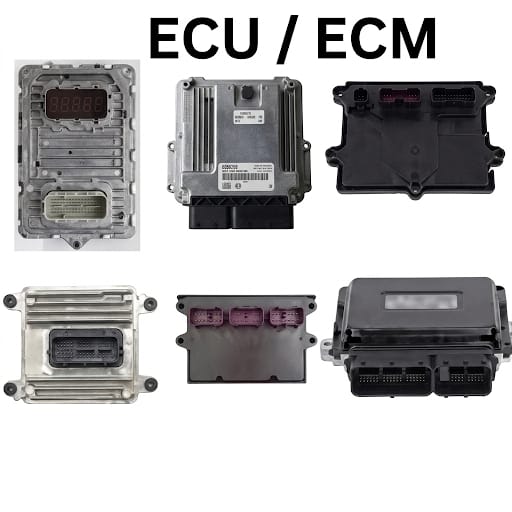
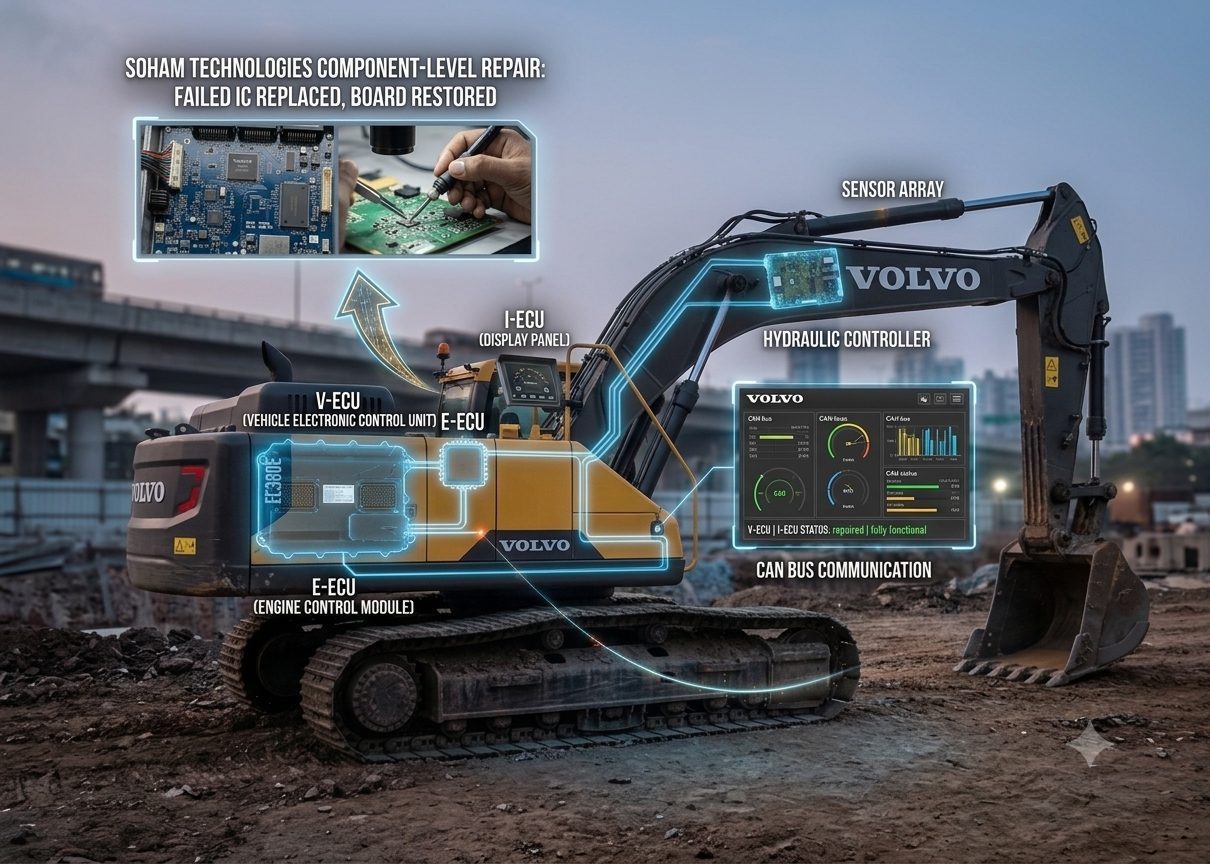
Volvo Construction Equipment (Volvo CE)—including heavy excavators, articulated haulers, and wheel loaders—is renowned worldwide for its engineering reliability, fuel efficiency, and advanced automated controls. To maintain optimal power distribution and hydraulic precision, modern Volvo machines rely on a sophisticated multi-controller CAN bus network. At the core of this system are the Vehicle Electronic Control Unit (V-ECU), Engine Controller (E-ECU), and operator display modules (I-ECU).When an electronic module fails on a Volvo machine, operation comes to an immediate halt. Display screens go blank, hydraulic functions become sluggish, or the engine enters a restrictive “limp mode.” Fleet owners and project managers are often advised to replace entire controller assemblies, leading to high OEM replacement costs and weeks of project delays.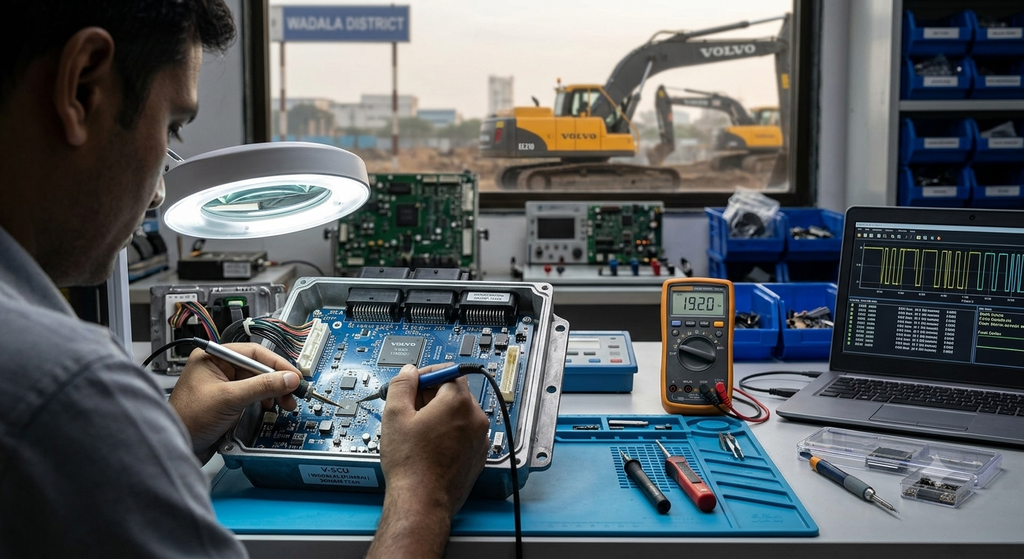
Understanding Volvo Construction Equipment Electronics Architecture
Volvo heavy machinery uses a distributed control architecture where specialized modules communicate over high-speed CAN networks:1. Volvo Excavator V-ECU (Vehicle Electronic Control Unit)
The V-ECU acts as the central brain for machine logic. It processes inputs from joysticks, pressure sensors, and mode selectors to control main hydraulic pump displacement, swing acceleration, boom/arm motion, and travel motor speed. When the V-ECU experiences component failure, operators may notice dead joystick responses, loss of attachment power, or machine communication errors.2. Volvo Wheel Loader & Excavator Display Monitors (I-ECU)
The Instrument ECU (I-ECU) or display monitor serves as the operator’s primary visual interface. It displays engine RPM, hydraulic oil temperature, coolant status, fuel consumption metrics, and active diagnostic trouble codes (DTCs). A malfunctioning display monitor leaves operators unable to track critical operating thresholds or select work modes.3. Engine Control Modules (E-ECU)
The E-ECU governs the diesel engine, managing common-rail fuel injection timing, turbo pressure, thermal regulation, and exhaust emissions. It works in continuous tandem with the V-ECU to harmonize engine horsepower with hydraulic load demands.Common Causes of Volvo Controller & Display Failures
Operating in aggressive construction, quarry, and infrastructure environments subjects electronic components to severe operational stress:
- Arc-Welding Surges: Conducting chassis arc-welding repairs without disconnecting the V-ECU and E-ECU harnesses can inject high-voltage transients into logic circuits, destroying microprocessors and driver ICs instantly.
- Vibration-Induced Joint Fracture: Continuous shock loads from excavation and hammering cause heavy onboard components (capacitors, power relays, transformers) to fracture solder joints on the PCB.
- Moisture Ingress & Corrosion: Aging rubber enclosure seals allow moisture and pressure-washer spray inside controller cases, leading to trace oxidation and short circuits across component pins.
- Thermal Stress: High operating temperatures within engine and hydraulic bays lead to thermal expansion cycles that degrade solder connections and thermal pads over time.
Specialized Repair & Troubleshooting Capabilities at Soham Technologies
Rather than replacing expensive complete modules, our Wadala workshop provides comprehensive troubleshooting and circuit-level repair services:
Volvo Excavator V-ECU Repair
- Repairing blown internal voltage regulators and power input protection circuits.
- Replacing shorted solenoid driver channels, MOSFETs, and power transistors.
- Restoring damaged CAN bus transceiver chips to resolve communication faults.
- Rebuilding burnt PCB copper traces and damaged connector pins.
Volvo Wheel Loader Display Monitor Repair
- Restoring dark, flickering, or completely blank LCD screens and backlight inverters.
- Replacing cracked, scratched, or non-responsive touch screen glass digitizers.
- Repairing damaged display processor ICs and memory chips.
- Repairing or replacing faulty keypads, navigation push-buttons, and encoder switches.
Volvo Excavator Controller Troubleshooting
- Point-to-point logic signal tracing using digital oscilloscopes and thermal imaging.
- Bench testing controller inputs and outputs under simulated operational loads.
- Inspecting and repairing sensor 5V/12V reference voltage supply rails.
Component-Level Repair vs. Full OEM Module Replacement
| Feature Metric | Component-Level Repair (Soham Technologies) | Full OEM Module Replacement |
| Direct Repair Cost | 60% to 70% Lower than new module cost | Extremely expensive OEM unit pricing |
| Turnaround Time | 24 to 72 Hours for standard repairs | Weeks or months waiting for imported stock |
| Machine Data | Retains existing engine hours and machine history | Requires dealer re-flashing and re-programming |
| Eco-Sustainability | Keeps functional hardware out of industrial e-waste | Discards complete boards due to single bad ICs |
Preventive Maintenance Tips for Machinery Operators
- Disconnect V-ECU Before Frame Welding: Always disconnect harness connectors from all onboard ECUs prior to arc-welding anywhere on the machine chassis.
- Protect Display Screen Housings: Avoid pointing high-pressure water spray directly at cab monitor enclosures during equipment washing.
- Ensure Electrical System Balance: Maintain healthy battery voltage and check alternator output regularly to prevent damaging voltage fluctuations.
- Inspect Enclosure Weather Seals: Inspect rubber seals and harness strain reliefs regularly to stop moisture ingress.