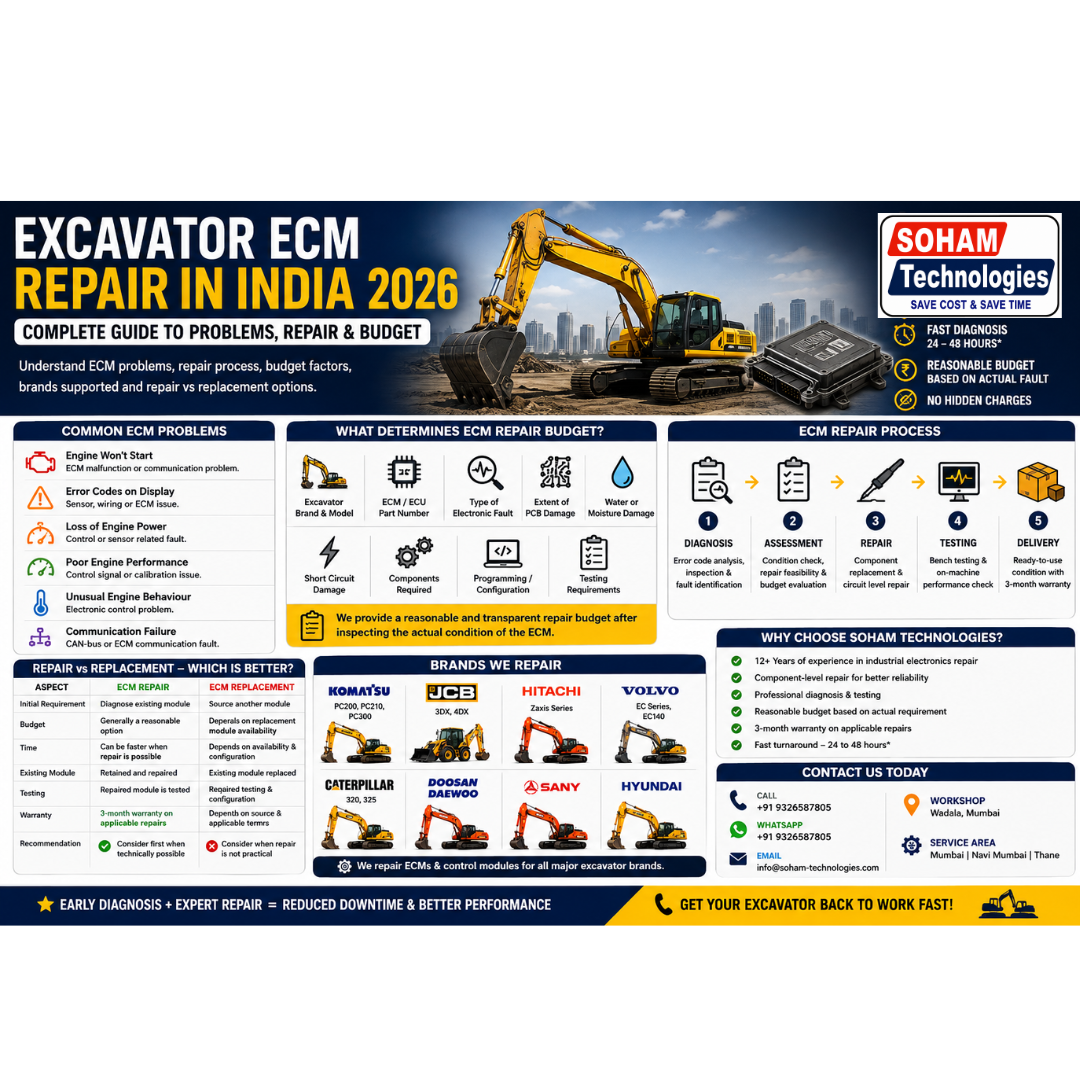
The construction industry has evolved dramatically over the past two decades. Modern excavators are no longer simple hydraulic machines powered solely by mechanical systems. Today, almost every critical operation inside an excavator is monitored, calculated, and controlled by advanced electronic systems designed to improve productivity, fuel efficiency, engine performance, emissions compliance, and overall machine reliability. Whether an excavator is being used for road construction, mining, quarrying, industrial projects, metro rail development, port expansion, or commercial infrastructure, electronic controllers have become the foundation of reliable machine operation.Among these electronic systems, the Electronic Control Unit (ECU) plays one of the most important roles. The ECU continuously processes information received from dozens of sensors installed throughout the excavator. It monitors engine operating conditions, fuel injection timing, throttle position, engine speed, coolant temperature, turbocharger pressure, intake airflow, crankshaft position, hydraulic load, exhaust emissions, and many other parameters. Every fraction of a second, the ECU performs complex calculations and instantly adjusts engine performance to match changing working conditions.When the ECU functions correctly, operators experience smooth engine operation, excellent fuel economy, consistent hydraulic performance, and reliable machine productivity. However, when internal electronic faults begin developing inside the controller, the excavator may experience unexpected shutdowns, poor engine response, communication errors, increased fuel consumption, warning lights, limp mode operation, or complete engine failure. These problems not only interrupt ongoing projects but also increase operating costs through equipment downtime, delayed project completion, labour inefficiencies, and expensive emergency repairs.Many equipment owners assume that replacing the entire Electronic Control Unit is the only available solution. However, this is often unnecessary. In many situations, the ECU can be restored through professional component-level repair, where experienced electronics engineers diagnose the root cause of failure, replace damaged electronic components, repair printed circuit board tracks, restore communication circuits, and thoroughly test the controller before returning it to service. This approach frequently provides a reliable and economical alternative to complete replacement, particularly for imported excavator models where new control units may be expensive or difficult to obtain.At Soham Technologies, we specialise in Excavator ECU Repair Services for construction companies, equipment rental businesses, mining contractors, infrastructure developers, industrial maintenance organisations, and heavy equipment owners throughout Mumbai and across India. Our engineering team combines industrial electronics expertise with modern diagnostic equipment to repair Electronic Control Units used in a wide variety of excavator models. Every controller is inspected carefully, tested systematically, repaired using professional electronic techniques, and verified before delivery.Instead of recommending unnecessary replacements, our objective is to restore the original ECU wherever technically feasible. This approach helps our customers reduce maintenance expenses, shorten machine downtime, preserve original equipment compatibility, and maximise the operational life of valuable construction equipment.
What Is an Excavator ECU?
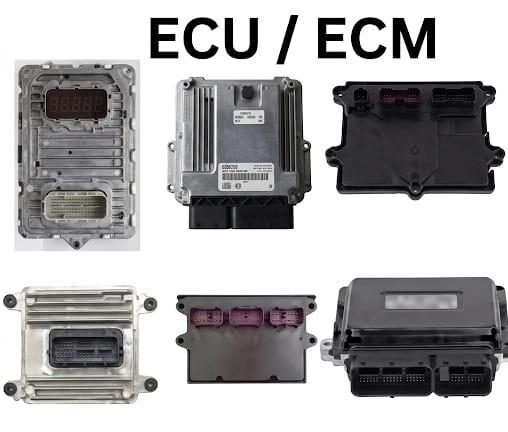
Unlike traditional mechanical control systems that depended primarily on fixed adjustments, modern ECUs use intelligent software and high-speed processors to adapt engine behaviour according to changing operating conditions. Every time the operator accelerates, lifts a heavy load, changes hydraulic demand, or works under different environmental conditions, the ECU instantly adjusts engine parameters to maintain optimum performance.The controller receives electrical signals from components such as crankshaft sensors, camshaft sensors, fuel pressure sensors, coolant temperature sensors, boost pressure sensors, throttle position sensors, oxygen sensors, exhaust sensors, intake air sensors, hydraulic pressure sensors, and various other monitoring devices. After analysing this information, the ECU controls fuel injection timing, engine speed, turbocharger performance, emission systems, idle control, engine protection strategies, and communication with other electronic controllers installed within the excavator.Because modern excavators rely heavily on electronic communication between multiple controllers, even a small fault inside the ECU can affect several machine functions simultaneously. A damaged communication circuit, unstable voltage regulator, failed processor supply, or corrupted memory device may interrupt data exchange across the CAN Bus network, resulting in warning lights, fault codes, reduced engine power, or complete shutdown.Understanding how the ECU operates helps equipment owners appreciate why accurate diagnostics are essential before replacing expensive electronic components.
ECU vs ECM – Are They the Same?
One of the most common questions asked by excavator owners is whether the Electronic Control Unit (ECU) and Engine Control Module (ECM) are different components. The answer depends largely on the manufacturer and the terminology used in their service documentation.Many manufacturers use the terms ECU and ECM interchangeably because both refer to the electronic controller responsible for managing engine operation. In some excavator models, the controller is officially described as the Engine Control Module, while in others it is referred to as the Engine Electronic Control Unit. Regardless of the terminology, both units perform similar functions by processing sensor information and controlling engine performance.However, modern excavators often contain multiple electronic control units responsible for different systems. In addition to the engine controller, machines may include hydraulic controllers, transmission controllers, monitor controllers, body control modules, climate control units, and specialised attachment controllers. Each controller communicates with the others through a high-speed electronic communication network.Because of this architecture, diagnosing electronic failures requires more than simply replacing one module. Engineers must determine whether the fault originates inside the ECU itself, within another controller, or somewhere in the communication network connecting all electronic systems together.
Why Professional ECU Diagnostics Matter
Replacing an Electronic Control Unit without proper diagnostics can become one of the most expensive mistakes in heavy equipment maintenance. Similar symptoms may be caused by damaged wiring, failed sensors, poor battery voltage, alternator charging problems, corroded connectors, CAN Bus communication failures, or software-related issues rather than an internal ECU fault.Professional diagnostics involve analysing live sensor data, measuring electrical voltages, checking communication signals, inspecting printed circuit boards, verifying power supply stability, and confirming controller operation before recommending repair or replacement. This systematic approach helps avoid unnecessary expenditure while ensuring the real cause of the problem is identified accurately.At Soham Technologies, every ECU undergoes detailed inspection before repair recommendations are made. Our engineers believe that accurate diagnosis is the foundation of reliable electronic repair, helping customers make informed maintenance decisions while avoiding avoidable replacement costs.
Why Component-Level ECU Repair Is a Smarter Investment
For many excavator owners, purchasing a brand-new Electronic Control Unit represents a significant investment, particularly when imported spare parts involve long delivery times and high replacement costs. In contrast, component-level repair focuses on restoring the original controller by repairing damaged electronic circuits wherever possible.This process involves detailed inspection of the printed circuit board, testing electronic components, identifying defective integrated circuits, repairing damaged tracks, replacing failed components, verifying communication systems, and performing comprehensive functional testing before the controller is returned to service.When carried out by experienced industrial electronics engineers using professional equipment, component-level repair often provides a dependable and cost-effective solution that helps extend the operational life of the excavator while reducing downtime and maintenance expenses.
Contact Soham Technologies
If your excavator is experiencing ECU communication failures, electronic controller faults, engine shutdown issues, or ECM-related problems, Soham Technologies provides professional component-level repair services designed to restore reliable machine performance.