

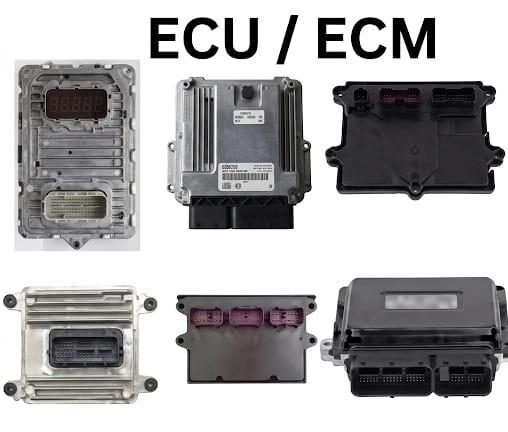
Complete Guide to Engine Control Module Repair for Heavy Construction Equipment
In today’s construction industry, excavators are no longer just powerful hydraulic machines that dig, lift, and move earth. They have evolved into intelligent equipment equipped with sophisticated electronic control systems that continuously monitor and optimize engine performance, fuel efficiency, emissions, hydraulic coordination, safety functions, and overall machine productivity. Whether the excavator is working on metro rail construction, highway expansion, mining operations, infrastructure development, quarry projects, industrial plants, or commercial building sites, its electronic systems play an equally important role as its mechanical components.
At the heart of this intelligent electronic system is the Engine Control Module (ECM), often referred to as the Electronic Control Unit (ECU). This advanced controller acts as the brain of the excavator, constantly processing data from dozens of sensors installed throughout the machine. Every second, the ECM receives information about engine temperature, fuel pressure, turbocharger performance, coolant temperature, crankshaft position, camshaft synchronization, throttle input, hydraulic demand, exhaust emissions, and numerous other operational parameters. Based on this information, it makes thousands of calculations to ensure the engine performs efficiently under varying working conditions.
When the ECM functions correctly, operators experience smooth engine performance, optimum fuel consumption, responsive hydraulic operation, and reliable machine productivity. However, when the ECM develops internal electronic faults, software corruption, damaged circuits, moisture ingress, overheating, or communication failures, the consequences can be severe. An excavator may suddenly refuse to start, lose engine power during operation, enter limp mode, display multiple fault codes, consume excessive fuel, or even shut down completely in the middle of a critical project. Every hour of unexpected downtime on a construction site translates directly into project delays, increased operational costs, equipment idle time, labour inefficiencies, and missed contractual deadlines.
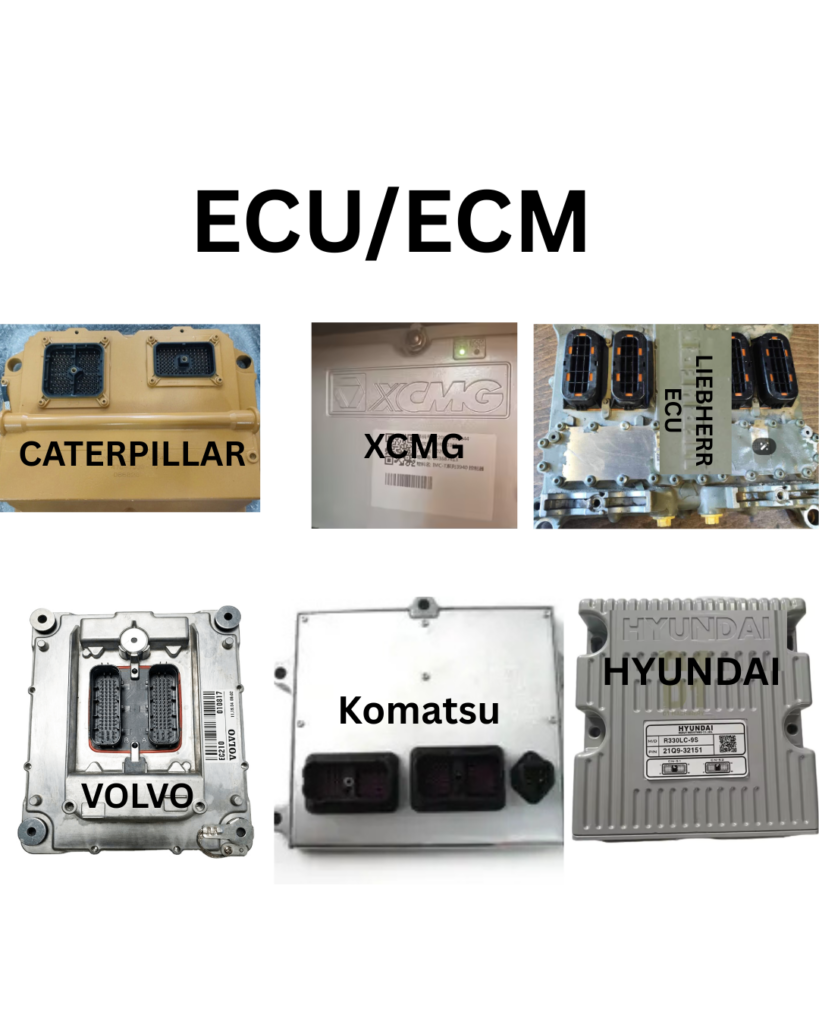
For contractors, fleet owners, equipment rental companies, mining operators, infrastructure developers, and industrial maintenance teams, replacing an Excavator ECM with a brand-new OEM unit is often an expensive decision. Depending on the machine model and manufacturer, a new Engine Control Module can cost several lakhs of rupees, and in many cases, imported spare parts involve long waiting periods before delivery. During this waiting period, the excavator remains out of service, resulting in significant financial losses.
This is why component-level Excavator ECM Repair in Mumbai has become the preferred solution for businesses looking to reduce maintenance costs without compromising reliability. Instead of replacing the complete controller, experienced industrial electronics engineers diagnose the root cause of failure, identify damaged electronic components, repair defective circuits, restore communication systems, replace faulty integrated circuits where required, and thoroughly test the ECM before returning it to service. When performed using professional diagnostic equipment and advanced electronic repair techniques, component-level repair can restore an ECM to reliable working condition while saving a substantial portion of the replacement cost.
At Soham Technologies, we specialize in professional Excavator ECM Repair in Mumbai for a wide range of construction equipment and heavy machinery. Our engineers focus on component-level electronic repairs using modern diagnostic instruments, precision soldering equipment, BGA rework stations, oscilloscopes, logic analyzers, industrial programmers, and functional testing systems. Instead of recommending unnecessary replacements, we carefully evaluate each Engine Control Module to determine whether it can be economically repaired, helping our customers maximize equipment uptime while reducing maintenance expenses.
Whether your excavator operates on construction sites across Mumbai, Navi Mumbai, Thane, Mira Road, Vasai, Virar, Kalyan, Dombivli, Bhiwandi, Palghar, Raigad, or anywhere in Maharashtra, professional ECM repair services can significantly reduce equipment downtime and improve operational efficiency. With proper diagnostics, experienced repair techniques, and comprehensive post-repair testing, many electronic failures that appear catastrophic can be successfully restored, allowing your excavator to return to work quickly and reliably.
This comprehensive guide explains everything you need to know about Excavator ECM Repair, including how the Engine Control Module works, common causes of electronic failure, warning signs that indicate an ECM problem, professional diagnostic procedures, component-level repair methods, supported excavator brands, preventive maintenance practices, and why repairing an ECM is often a smarter investment than replacing it.
Understanding the Role of an Excavator ECM
Many equipment owners believe the Engine Control Module simply starts the engine. In reality, the ECM performs hundreds of critical functions every second while the excavator is operating. Modern excavators are equipped with complex electronic architectures where multiple controllers communicate continuously through high-speed CAN Bus networks. The ECM acts as the primary processing unit within this network, coordinating engine performance while exchanging data with hydraulic controllers, display monitors, instrument clusters, transmission controllers, emission systems, and other electronic modules installed throughout the machine.
The Engine Control Module receives input from numerous sensors positioned throughout the excavator. These include crankshaft position sensors, camshaft sensors, fuel rail pressure sensors, intake manifold pressure sensors, coolant temperature sensors, air temperature sensors, throttle position sensors, oxygen sensors, exhaust pressure sensors, turbocharger boost sensors, and many additional monitoring devices. Every sensor continuously transmits electrical signals to the ECM, allowing it to calculate the most efficient engine operating conditions under changing workloads.
For example, when an operator begins digging into hard soil, the hydraulic system suddenly demands increased engine torque. The ECM immediately detects this change through multiple sensor inputs and adjusts fuel injection timing, injection quantity, turbocharger boost pressure, engine speed, and combustion parameters to maintain consistent hydraulic performance. Without these continuous electronic calculations, modern excavators would suffer from poor fuel economy, sluggish hydraulic response, excessive emissions, and reduced engine life.
In addition to engine management, the ECM also performs continuous self-diagnostics. Whenever abnormal sensor readings, communication failures, voltage fluctuations, or internal circuit errors occur, the controller stores diagnostic trouble codes that assist technicians during troubleshooting. These fault codes often provide valuable information regarding electrical failures, although interpreting them correctly requires specialized diagnostic tools and practical experience.
As excavator manufacturers continue integrating advanced emission systems such as Common Rail Diesel Injection, EGR (Exhaust Gas Recirculation), SCR (Selective Catalytic Reduction), and Diesel Particulate Filters, the complexity of ECM software and electronic circuitry has increased significantly. Consequently, professional ECM repair today requires much more than simply replacing damaged components. Engineers must understand embedded electronics, automotive communication protocols, industrial PCB repair, software integrity, sensor calibration, and electronic testing procedures to ensure reliable long-term performance.
Why Excavator ECM Failures Are Becoming More Common
Construction sites are among the harshest operating environments for electronic equipment. Unlike electronics installed in climate-controlled industrial facilities, excavator control modules are continuously exposed to dust, mud, vibration, moisture, hydraulic oil contamination, fluctuating temperatures, engine heat, and electrical disturbances. Over months and years of operation, these environmental factors gradually affect sensitive electronic circuits inside the Engine Control Module.
One of the most common reasons for ECM failure is prolonged exposure to excessive heat. Excavators frequently operate under heavy loads for extended periods, especially during mining, quarrying, road construction, and infrastructure projects. Elevated engine temperatures increase the internal temperature of the ECM, accelerating the ageing of electronic components such as capacitors, voltage regulators, microprocessors, and solder joints. Repeated heating and cooling cycles eventually weaken solder connections, creating microscopic cracks that lead to intermittent faults or complete controller failure.
Another significant cause of failure is voltage instability. Weak batteries, faulty alternators, damaged wiring harnesses, incorrect jump-start procedures, welding without disconnecting electronic modules, or short circuits can all expose the ECM to abnormal voltage spikes. Sensitive semiconductor components are designed to operate within specific voltage limits, and excessive electrical surges can permanently damage internal circuits, communication drivers, and processor interfaces.
Moisture ingress is equally destructive. Even though modern ECM housings are designed to resist environmental contamination, damaged seals, cracked casings, improper installation, or long-term exposure to water can allow moisture to enter the controller. Once inside, corrosion begins forming on printed circuit boards, connector pins, and integrated circuits. Over time, corrosion disrupts electrical continuity, increases resistance, and eventually causes unpredictable electronic failures that become increasingly difficult to diagnose.
Mechanical vibration also plays a significant role in controller failures. Excavators constantly experience heavy vibration while breaking rock, compacting soil, operating hydraulic breakers, or travelling across uneven terrain. Continuous vibration stresses solder joints, connector pins, and large electronic components, gradually causing fatigue failures that may only appear intermittently before progressing into complete ECM malfunction.
Electrical communication problems within the CAN Bus network can further complicate diagnosis. In many situations, the ECM itself may still be functional, but damaged wiring, faulty sensors, poor grounding, connector corrosion, or another controller on the network can interrupt communication and generate misleading fault codes. Professional diagnostic procedures are therefore essential before deciding whether repair or replacement is necessary.